





What Is Draw to Goal Game?
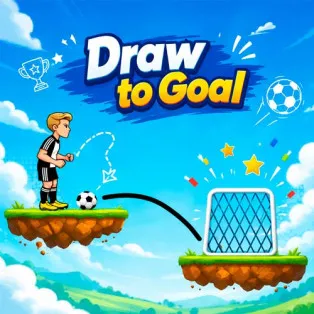
Draw to Goal is a 2D physics puzzle game that is a mix of soccer and creative problem-solving. You don't really need to control the ball, but instead make a series of ramps, curves and angled passes to set up a soccer ball for the goal.
You'll face moving barriers, narrow passages and other logic and spatial challenges as you advance through handcrafted levels. Often there are multiple solutions to a puzzle, so that players can experiment and enjoy playing creatively.
Draw to Goal Game Rules
The objective is simple: guide the soccer ball into the goal by drawing the best possible route. Adjust the shooting power to keep the ball from falling out. When making a draw, spend a moment observing the goal, any obstacles and any moving hazards. Then make gentle curves and ramps that let gravity and momentum propel the ball naturally to the target.
Accurate bounce angles can help redirect the ball, while careful timing is important when moving barriers cross the play area. There are some levels that also feature red balls that will blow up things in their way and blue obstacles that your ball can shove around. When the solution does not work, wipe out your lines or reset the level and go for an alternate solution.
Game Controls
PC:
- Left Mouse button: Click and drag to draw a path.
- Kick/Play button: launch the ball.
- Eraser button: remove drawn lines.
- Reset button: restore the level.
Mobile:
- Touch and drag to draw the ball's path.
- Tap the on-screen buttons to play, erase, or reset.
Standout Features Make Players Addictive
- Draw your own ramps, curves, and creative paths.
- Realistic physics based on gravity, momentum, and bounce angles.
- Hundreds of handcrafted puzzle levels.
- Static and moving obstacles that require careful planning.
- Multiple solutions for many puzzles.
- Browser-based gameplay on desktop and mobile with no download required.
Expert Tips & Tricks
- Examine the entire level before drawing your first line.
- Use smooth curves for more consistent ball movement.
- Let walls help create useful bounce angles.
- Time your launch carefully around moving obstacles.
- Don't hesitate to erase and redraw if your first idea fails.
- Experiment with different paths, as many puzzles have more than one successful solution.